What an evening! Three great works, two being brand new. The staging, the technique, the choreography, the music, all was just perfect. I look forward to seeing them again.
Cause I am lazy today, you can read reviews here and there.
Thursday, November 30, 2006


Friday, November 24, 2006
Mariza - Royal Albert Hall - review

The portuguese singer Mariza was at the Royal Albert Hall yesterday evening for a memorable concert. Who would have thought that a fado singer could fill up this huge venue?
Wearing her traditional black dress with long black necklaces, she shared the stage with her musicians and the Serious string orchestra, directed by Brasilian composer Jacques Morelenbaum, who also produced her third album, Transparente. Joining her to sing throughout the evening were male fado legend Carlos do Carmo (her "master"), Tito Paris from Cape Verde (her "favourite African singer"), and Rui Veloso ("the biggest portuguese singer") So it was almost a "Mariza and friends" evening, really. It was also a true "atlantic wave" (as the festival this concert was part of is called) and some sort of "fado and its influences" night, since fado's roots are part Brasilian, part African.
 It was fun to notice the difference between her and Carlos do Carmo, who has been a fado singer for 44 years (fado is only 200 years old). He moves much less than her (he is not as young, obviously!) and, when we started to clap at the beginning a song, he asked us not to clap "no no do not clap, you can sing with me, but certainly not clap, please". He still was an amazing performer, who won the crowd over with his humour and by singing traditional songs very well known in Portugal. As Mariza said "You can see why he is my master".
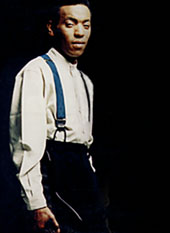 Tito Paris was a lovely little man, with braces and a cap, guitar in hand, shyly singing some sweet morna songs from Cape Verde, including Sodade. The audience was happy to join in and asked him to play a third song, when Rui Veloso entered the stage, to huge cheers from the Portugueses in the audience.
 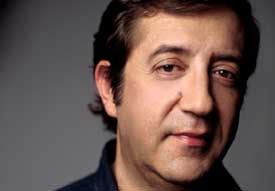 A big star in this country since the 80s, he was a surprise guest, as "I was holidays here, and she asked me to come and sing with her". He only sang Transparente and decided to leave Mariza alone to perform the other song he had written for her Feira de Castro.
Mariza was at her usual best. It seems like she can never disappoint live. Her voice is so amazing and powerful, she really uses it to its full range. Her stage presence is fantastic. I have filmed her singing without microphone at the centre of the Albert Hall. She has no fear, has she? If anyone on the balcony is reading this, could they let me know if they could hear her?
The Guardian talks about "a remarkable evening", The Times says the concert was "a coronation". You know what to do next time she performs near you!
Cloudspotting
Cloudspotting is back this week, thanks to my sister! Hugs to her!

St Jean de Luz, November 06

St Jean de Luz, November 06
Wednesday, November 22, 2006
Sunset-spotting
Sorry for the lack of cloudspotting pictures these past two weeks but I have no internet at home so cant upload my own pics :-(
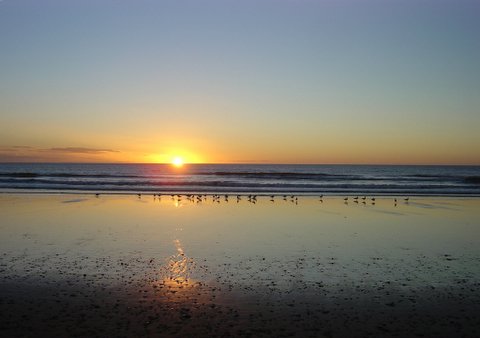
But my parents were on holidays in Morocco last week and have forwarded me this nice sunset pic.
For all those who miss the ocean and the open spaces!!

But my parents were on holidays in Morocco last week and have forwarded me this nice sunset pic.
For all those who miss the ocean and the open spaces!!
Wednesday, November 15, 2006
Obiang in Spain
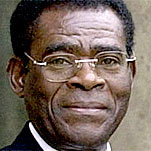 Great! Teodoro Obiang, the president of Equatorial Guinea, was supposed to visit the Spanish Parliament this morning, but it was all cancelled
The official reason is timetable organisation apparently, not the opposition of the MPs of PNV (Nationalist Basque party), IU (Izquierda Unida, left) and ERC (Republican Catalan party) to the visit. Of course!
Why such opposition? Simple. Equatorial Guinea has the second highest income in the world at about £ 26 000 per head, thanks to oil revenues from its Zafaro oil field. But it also comes bottom in the United Nations' Human Development Index, which measures quality of life says the Guardian
Teodoro Obiang has $ 700 million in foreign bank acounts, and was recently re-elected with 97% of the votes. According to a 1999 report by the International Monetary Fund, oil companies received “by far the most generous tax and profit-sharing provisions in the region.” The state received only 15 to 40 percent of the revenues from its oil fields, while the norm in sub-Saharan Africa was 45 to 90 percent.
Glad to see a Parliament care about human rights for once!
More can be read on the corruption in Equatorial Guinea in this Mother Jones article
Tuesday, November 14, 2006
Jeff Koons and La Cicciolina!!
 It is with great surprise that I found out last week that the American artist Jeff Koons married Ilona Staller, aka the one and only Cicciolina, in 1992.
Jeff Koons? La Cicciolina? What?? They even made some porn pics and glasswares together, in a series called the "Made in Heaven". I guess Koons is known for his use of kitch imagery, and is there anything kitcher than La Cicciolina??
The pic below is called Ilona with Ass Up.

On the "salsa rosa" front, they even got a boy, who was abducted by his mum, who wont allow Koons to see him! what da f!
Monday, November 13, 2006
Carsten Holler slides
I finally made it to the Tate Modern slides I mentioned earlier.
I didnt find it challenging, but I enjoyed chatting with people in the queue, sharing the excitement and slight fear and I couldnt help but smile for 10 minutes once I had gone down for the 4th floor.
Really good fun.
I didnt find it challenging, but I enjoyed chatting with people in the queue, sharing the excitement and slight fear and I couldnt help but smile for 10 minutes once I had gone down for the 4th floor.
Really good fun.
Holbein in England - Tate Britain - review
 Hans Holbein the Younger (he is the Younger cause his father, Hans Holbein the elder, ran a successful workshop in Germany) came to England in 1526 with the recommendations of Erasmus, and made it big here, becoming a few years later Henry VIII's official court painter.
This exhibition offers great evidence of Holbein's "ability to depict likeness, texture, light and stillness" so well you feel like you could touch the cloth or the skin he has painted.
Everything you see amazes you: the eyebrows in his drawings are so precise, literally hair by hair; the parting of the lips, executed in one fine line; the fur, the silk, the embroideries, the pearls... Everything looks so real.
However, one notices no artistic evolution in his work. Holbein's style remains the same from his arrival in the UK until his death. His trademark is "perfect likeness to reality". In a time where there was no photography, where portraits were a treasure, a sign of success, when portraits were also the only way for the Henry VIII to heck out a potential wife, Holbein's talent and skills were very much in need, so why change the style?
Therefore, my view is that Holbein will amaze you with his talent, but not surprise you. In a sense, once you have seen an Holbein, do you need to see any other? Still, I recommend you see at least one!
Monday, October 30, 2006
El Roto

In the middle east, we wear the burka to be invisible, and in the west we wear it to be seen.
El Roto publishes daily for the newspaper El Pais.
Friday, October 27, 2006
Pieter Hugo
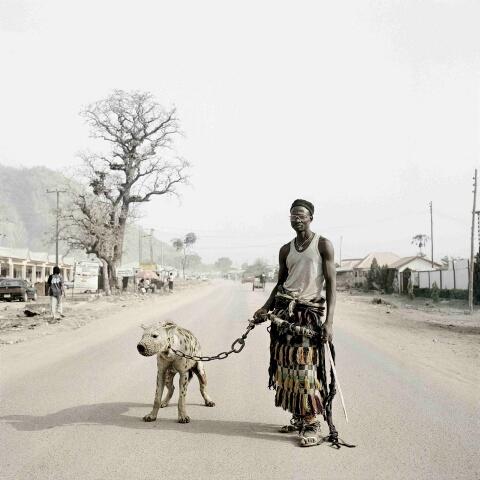
This picture by Pieter Hugo won the World Press prize for best photojournalism picture. The colors are amazing, it really goes with the surrealism of seeing a hyena on lead.
More winners can be seen on the Liberation website.
Monday, October 23, 2006
David Hockney at the National Portrait Gallery
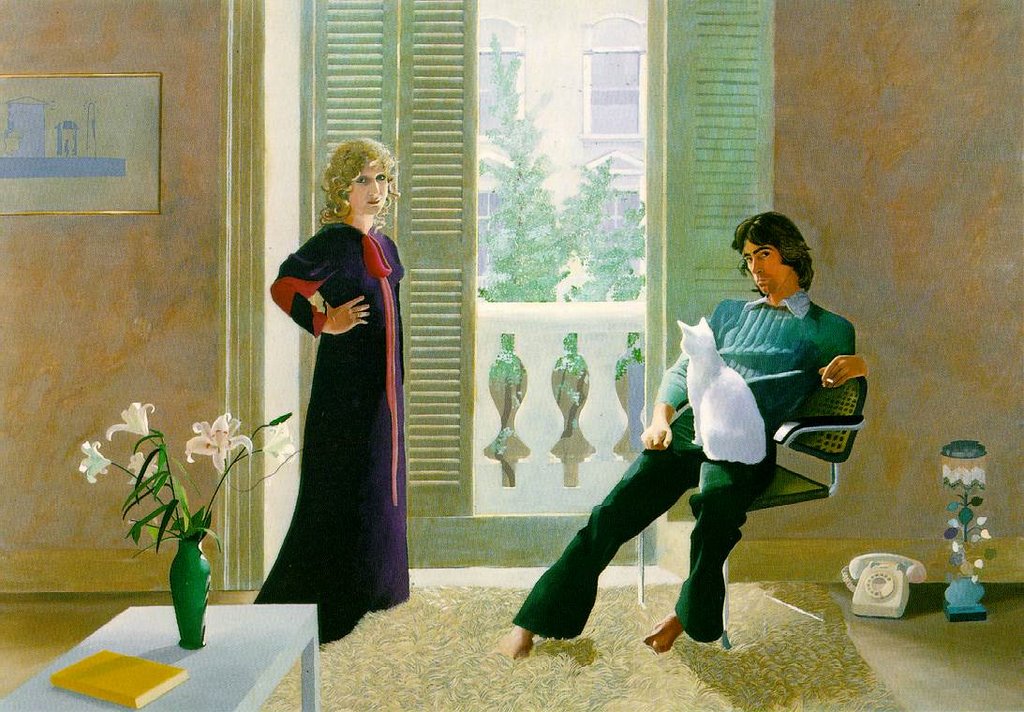
Went to see David Hockney's Portraits exhibition at the National Portrait Gallery yesterday and enjoyed it very much.
I knew Hockney for his big colurful paintings, whether portraits or landscapes. I wasnt aware he was also a master of simple drawings and photography.
Sketching to him is an extension of seeing, and he seems to be sketching constantly. He is obsessed with the idea of seeing and representing. I didnt know he had such a fascination for Picasso either, and with the history of art in general. I really want to read his book: Secret Knowledge, Rediscovering the Techniques of the Old Masters.
Amazon says: This book is the fruit of his practical and historical investigation into how artists from the 15th century onward produced such vividly realistic drawings and paintings. Hockney's conclusions are simple but devastating. He argues that, "from the early 15th century many Western artists used optics--by which I mean mirrors and lenses (or a combination of the two)--to create living projections". The results are extraordinary. Secret Knowledge carefully explains how Masaccio, Van Eyck, Holbein, Caravaggio, Vermeer and Ingres all used optical aids, as it carefully takes apart the paintings and recreates the instruments and techniques used by artists from as early as the 1430s.
Interesting no?
Friday, October 20, 2006
Gael Garcia Bernal at the NFT
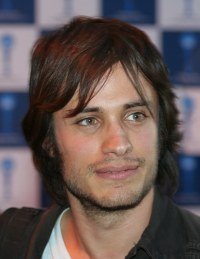 Mexican actor, director and cutie Gael Garcia Bernal was at the National Film Theatre for a talk on Monday. I couldn't afford to go but that's alright, cause the Guardian has a transcript of the whole interview.
I recommend you read it all. He turns out to be a very politically engaged actor who is really giving all he has to make films with meanings and to improve his country's (Mexico) situation. Among other things, he has created his own production company and is launching a travelling documentary festival in Mexico, Ambulante.
Here are a few bits that interested me:
"It is truly impossible to take politics out of any story made in Latin America or Mexico. The place demands that you involve its history. It would be very disappointing not to use that wider scope. I think Y Tu Mamá También is a truly involved political film that will be more important in 10 years' time because it is a document of something that was happening in Mexico right after the fall of the PRI, the party that was in power for 72 years. So it is inevitable to be political and I must say it is irresponsible not to acknowledge it. It augments the fiction and it is there to be grabbed and used, without the politics having to be spoon-fed to the audience."
"[The Motorcycle Diaries] was a film where, if I'd been a bit detached from it, it would have been a useless experience. You had to give yourself and transform yourself as the two guys on that journey transformed themselves"
" I think that by working together is where Latin American cinema can find its place. I think we should work as a bloc: we share the same language - the case of Brazil is different, but we share the same circumstances and we might as well work together. You go to a film festival and you find one stand called Asian cinema - in Asia, they speak so many languages and the cultures are so very different, and there're more people and it's more diverse there. And then you go to the Mexican stand, the Argentinian stand, the Cuban stand, the Colombian stand and you're lost. We should work as a bloc"
"Almodóvar is one of those people who can give himself that luxury, he can start shooting any time he wants, he can hire any actor he wants. He's a great director. He's very specific - he tells you how many steps to take from here to there. If he says it's nine steps, you have to make it in nine. So that creates a tension, but it also creates a world"
"You asked about the nostalgic feeling in my work - well, that's the nature of it. There is this vision of Latin America as a place of pure celebration, but actually I see it as a cage of melancholy, but melancholy flies a lot and looks like a happy bird. Octavio Paz put it so well, it's a labyrinth of solitude."
"You might have an idea of what you're doing, but when you're on stage, you get lost. And that moment of losing yourself, of not knowing what the hell you're doing and thinking that you're going deep into a whirlwind and hoping that someone will catch you at the end, that is called a performance. That's when a director catches you, and that's when the audience acknowledges your leap of faith into something that's so incredibly unknown"
"I want to say one more thing before you leave, just one little thing. Whoever of you wants to be an actor, or film director, or writer or film producer or whatever. Honestly, I used to be sitting back there. I know this sounds like the biggest cliche ever, but it really is possible to tell a story and just go out and do it. Doesn't matter if only two people see it, doesn't matter if you get up on the stage and one of the lights goes out. It is important to tell a story and be faithful to yourself, be consistent. Just do what you like. So hopefully many people will go from here and do a film one day, even if it's in 10 years' time. I am very, very glad to be here and I'm getting very sentimental, but it's so important to me to be here. Thank you so much."
Thursday, October 19, 2006
We answer to the name of Liberals
A letter, signed by 44 American professors, in the magazine American Prospect, denouncing the failures of the Bush Administration. In there, a very good definition of what being a liberal (ie from the left) and what binds us together in a democracy.
"We reaffirm the great principle of liberalism: that every citizen is entitled by right to the elementary means to a good life. We believe passionately that societies should afford their citizens equal treatment under the law -- regardless of accidents of birth, race, sex, property, religion, ethnic identification, or sexual disposition. We want to redirect debate to the central questions of concern to ordinary Americans -- their rights to housing, affordable health care, equal opportunity for employment, and fair wages, as well as physical security and a sustainable environment for ourselves and future generations"
"Reason is indispensable to democratic self-government. This self-evident truth was a fundamental commitment of our Founding Fathers, who believed it was entirely compatible with every American's First Amendment right to the free exercise of religion. When debating policy in the public square, our government should base its laws on grounds that can be accepted by people regardless of their religious beliefs. Public commitment to reason and evidence is the bedrock of a pluralist democracy"
Read the whole letter here and in French here
"We reaffirm the great principle of liberalism: that every citizen is entitled by right to the elementary means to a good life. We believe passionately that societies should afford their citizens equal treatment under the law -- regardless of accidents of birth, race, sex, property, religion, ethnic identification, or sexual disposition. We want to redirect debate to the central questions of concern to ordinary Americans -- their rights to housing, affordable health care, equal opportunity for employment, and fair wages, as well as physical security and a sustainable environment for ourselves and future generations"
"Reason is indispensable to democratic self-government. This self-evident truth was a fundamental commitment of our Founding Fathers, who believed it was entirely compatible with every American's First Amendment right to the free exercise of religion. When debating policy in the public square, our government should base its laws on grounds that can be accepted by people regardless of their religious beliefs. Public commitment to reason and evidence is the bedrock of a pluralist democracy"
Read the whole letter here and in French here
Thursday, October 12, 2006
Orhan Pamuk Nobel Prize
The Turkish writer Orhan Pamuk was awarded the Nobel Prize for Litterature today.
It is fantastic that he receive such a prize, as he was taken to court in his home country, Turkey, for denouncing the 1915 genocide of Amernians and Kurds led by the Turkish.
It is also great that he receives such a prize today, just as the French Assemblee Nationale voted a law prosecuting anyone denying the Armenian genocide.
Go truth!
It is fantastic that he receive such a prize, as he was taken to court in his home country, Turkey, for denouncing the 1915 genocide of Amernians and Kurds led by the Turkish.
It is also great that he receives such a prize today, just as the French Assemblee Nationale voted a law prosecuting anyone denying the Armenian genocide.
Go truth!
Wednesday, October 11, 2006
Carsten Holler slides - cant wait to go!

The artist Carsten Holler has installed huge slides in the Tate Modern's Turbine Hall. The longest drops from the 5th floor, and that is 27 m high!
Apparently, the feeling is amazing!
What is the link with art?
Well, it certainly has something to do with architecture and psychology, according to Holler.
"For some reason that I don't understand slides have not been taken up," he said. In his view, they provide a safe, fast and efficient means of transportation through and between buildings. The experience of descent also "gives you a moment of relief," he said. "It gives you the possibility to let some of those things go that you carry around as an adult. By letting yourself go you somehow get to the bottom of things."
The slides are on for 6 months, so people, come and visit! Until then, have a look here
Friday, October 06, 2006

Thursday, October 05, 2006
Elie Medeiros - Toi mon toit
This is one of the first songs I loved as a child. I was only 5!
Love the rythm and the lyrics are quite cute ("the butterflies... in the air! and the ants... on the ground!"). Those lyrics are also a bit naughty ("Take a little fish, put it between my legs...") but I just thought that was weird. All I wanted was the fish-dress worn by the singer, Elie Medeiros. And the sparkly one at the end, even better!! :-)
Love the rythm and the lyrics are quite cute ("the butterflies... in the air! and the ants... on the ground!"). Those lyrics are also a bit naughty ("Take a little fish, put it between my legs...") but I just thought that was weird. All I wanted was the fish-dress worn by the singer, Elie Medeiros. And the sparkly one at the end, even better!! :-)
Entrance of a bordel
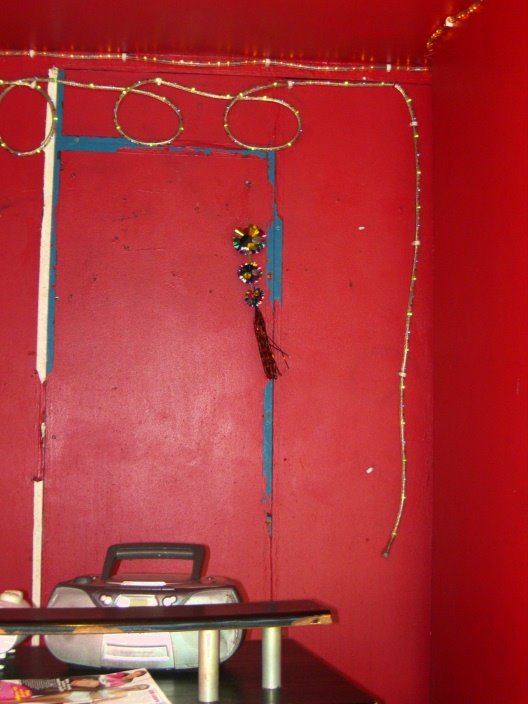
Michael took this picture of the entrance of a strip club, peep show place, on Great Windmill Street. London, 03/10/06
Monday, October 02, 2006
Mobile phones and sardines in Kerala
A really exciting piece in Liberation today, written by a professor from the Massachussets Insitute of Technology, about the digital divide between developed and developing countries.
Should developing countries try to reduce the technology gap or focus on getting the essentials (water, health...) right first? Both sides have good arguments, and here, Esther Duflo tells a story showing the unexpected advantages of introducing mobile phones on the Kerala coastline (South India).
Mobile phones have helped sardines fishermen increase their profits by 8%, at the same time as reducing the price of sardines by 4% and avoiding wastage all together. Now how is that possible?
Fishermen go to sea, along the coast (max 25km), early in the morning, and by 8am are back on beaches to sell their catch. Those beaches are quite far apart, so they were unable to move from one beach to another if there was too much competition on one beach. The same for fish buyers: if there was not enough fish to buy, they sometimes went home empty handed.
Now, with mobile phones, fishermen can decide before coming ashore who they are selling the sardines to, or what price they will sell them to. All the fishermen have access to all the buyers, and vice versa. Results: reduced volatily of prices, no wastage, better prices and better profits for all.
Good no?
Should developing countries try to reduce the technology gap or focus on getting the essentials (water, health...) right first? Both sides have good arguments, and here, Esther Duflo tells a story showing the unexpected advantages of introducing mobile phones on the Kerala coastline (South India).
Mobile phones have helped sardines fishermen increase their profits by 8%, at the same time as reducing the price of sardines by 4% and avoiding wastage all together. Now how is that possible?
Fishermen go to sea, along the coast (max 25km), early in the morning, and by 8am are back on beaches to sell their catch. Those beaches are quite far apart, so they were unable to move from one beach to another if there was too much competition on one beach. The same for fish buyers: if there was not enough fish to buy, they sometimes went home empty handed.
Now, with mobile phones, fishermen can decide before coming ashore who they are selling the sardines to, or what price they will sell them to. All the fishermen have access to all the buyers, and vice versa. Results: reduced volatily of prices, no wastage, better prices and better profits for all.
Good no?
Sunday, October 01, 2006
a good movie!
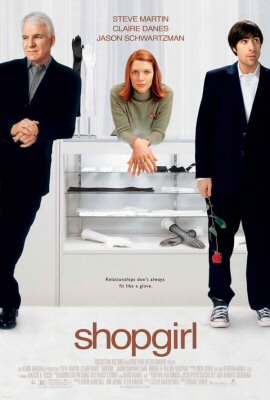 Watched Shopgirl, starring Claire Danes and Steve Martin, and thought it was really good. I cant work out if it was sparse or too sophitiscated. Let's say it is elegant. I cant work out if the story is believable or not, but let's say I related to it.
It had some great long travelling shots, beautiful lighting, good lines and characters I cared about. And Claire Danes is superb in that movie. Her performance is the only thing critics agreed upon. For the rest, it's very mixed. Only 62% fresh on Rotten Tomatoes...
Some people found unbelievable that such a girl would fall for Steve Martin (born 1945!) but his character is a rich man, a bit shy at the beginning, quite a gentleman. What would people say if that man was a dwarf or a fatty? I say why not?
Another boy is after Mirabelle, the geeky Jeremy. After a not very good first fling, he leaves on tour with a rock band and comes back changed. It is sad that the scenarist (Steve Martin himself) decided to make him change through self-help books, when the reason he changed is simple: he just did what he wanted to do, and through that became more confident and had more to give.
People point to plot-holes and things being a bit too "engineered", but, man, women's favourite romantic comedy tells about a whore who falls for her client, how engineered is that!
Anyway, this is my movie recommendation for this week.
Subscribe to:
Posts (Atom)